REVIEW · KAUAI
Hawaiian Reef Spearfishing Lesson for Beginners on Kauai
Book on Viator →Operated by Pomai Ka'i · Bookable on Viator
Spearfishing on Kauai feels both ancient and technical. You get a 45-minute on-shore master class followed by a guided two-hour spearfishing session at Anini Beach, with hands-on help from instructors like Aidden, Christian, and Tui. I especially like that the lesson is built around practical safety, how to spot native vs invasive reef fish, and how to shoot in a way that respects the ocean.
The main drawback to plan for is effort: you’ll need strong swimming and snorkeling comfort, and the spearfishing setup can be physically demanding. Fins are required (you bring your own), and you may be swimming against current, plus the outer reef is farther out than casual snorkelers expect.
In This Review
- Key points before you book
- Why Anini Beach Works So Well for Beginner Spearfishing
- The 45-Minute Master Class: Safety, Fish ID, and Getting Your Body Ready
- The Two-Hour Guided Spearfishing Session: Practice, Patience, and Real Reef Time
- What Happens at the End: Photos, Q&A, and a Take-Home Catch
- Gear and Logistics That Matter Most (So You Don’t Get Stuck)
- What’s included
- What you must bring
- The Fishing License Reality: Don’t Get Surprised by Paperwork
- Value on Kauai: Is $125 Worth It?
- Who This Speaks To Best (And Who Might Hesitate)
- Tips to Make Your Day Easier (Learned the Hard Way for You)
- Should You Book Hawaiian Reef Spearfishing on Kauai?
- FAQ
- Where do we meet for the Hawaiian Reef Spearfishing Lesson?
- How long is the lesson?
- What time does it start?
- How many people are in the group?
- What language is the lesson taught in?
- What equipment is included, and what do I need to bring?
- Do I need a Hawaii recreational ocean fishing license?
- Is there a catch guarantee?
- What happens at the end of the tour?
- What is the cancellation policy?
Key points before you book
- 45-minute on-shore training covers safety, gear handling, and reef fish ID (native vs invasive)
- Small group size (max 6) means you’ll get real coaching instead of being left to figure it out
- Two-hour guided session on the reef gives you repeated chances to practice your technique
- No guarantee of a catch, and that’s part of the lesson: technique and patience come first
- Fins are required and current resistance can make cheap fins feel limiting
- If you do catch fish, the guide bags it so you can enjoy a take-home catch later
Why Anini Beach Works So Well for Beginner Spearfishing
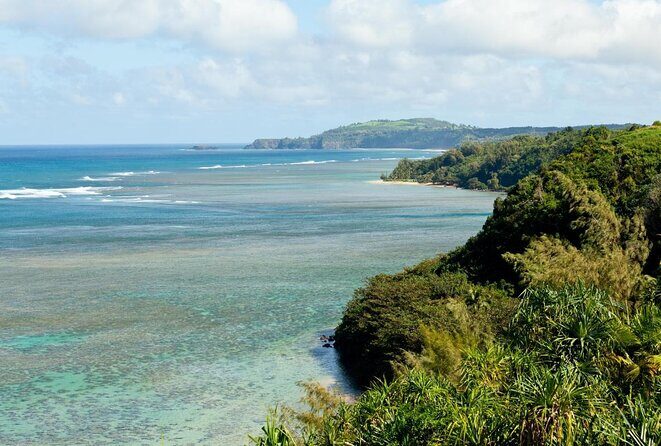
Kauai has plenty of places to snorkel, but beginner spearfishing needs more than pretty water. The Anini Beach meeting point (4241 Anini Rd, Kilauea) sets you up for a lesson that starts on land and then moves into a guided water session where you can actually apply what you practiced.
One thing I like about this style of training is that it treats spearfishing like a skill, not a lottery. You’re not just dropped on a reef with a spear. You learn how to handle gear safely, how to think about what you’re aiming at, and how to move as a group while still trying your own shots.
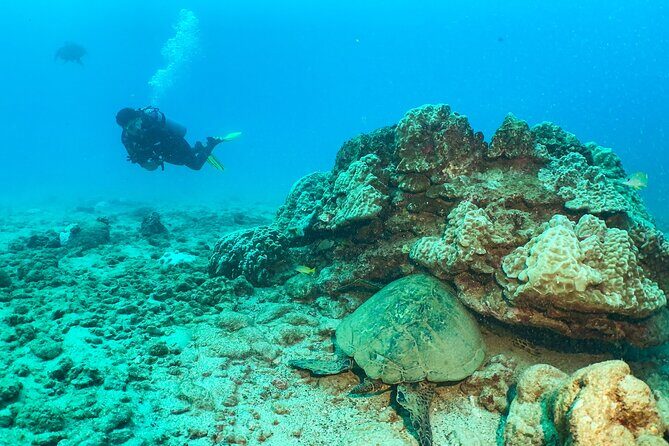
Also, the reef experience here is not just about fish. You’ll be out among Hawaiian marine life, and many people come back talking about sea turtles and the full reef “neighborhood” feeling—coral, sea life, and the challenge of staying steady in the water long enough to shoot well.
A few more Kauai tours and experiences worth a look


The 45-Minute Master Class: Safety, Fish ID, and Getting Your Body Ready
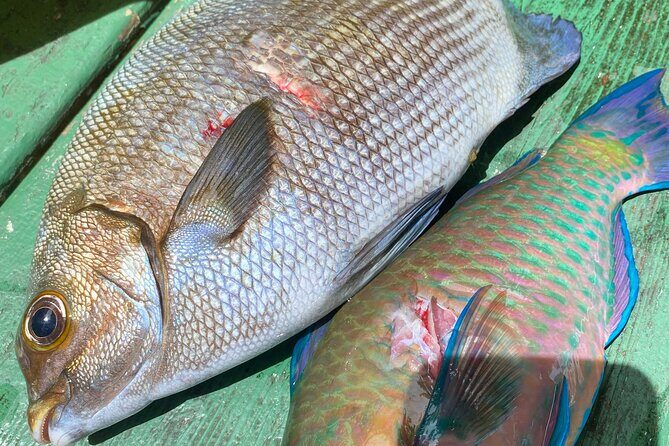
Before you head out, the program starts with about 45 minutes on shore. This isn’t filler time. It’s where you learn the rules that keep this sport fun and safe, especially for first-timers.
You’ll go over:
- Gear safety and how to handle the spearfishing equipment responsibly
- How to identify native and invasive reef fish so you’re not just guessing
- How to use the spear setup correctly so you’re aiming with control, not chaos
- Responsible practices before anyone ever tries their first shot
Then you suit up and get that important reality check: you’ll be moving with snorkel gear and dealing with real water conditions. One review even noted that the deepest area can be around 5 feet, which helps you mentally if you’re worried about being too far down. Still, you should expect current resistance and some work to keep your position.
If you’re comfortable in the water already, this master class helps you move faster. If you’re rusty with snorkeling, it can feel like a lot at first, so you’ll get the most out of it if you’re prepared to focus.
The Two-Hour Guided Spearfishing Session: Practice, Patience, and Real Reef Time
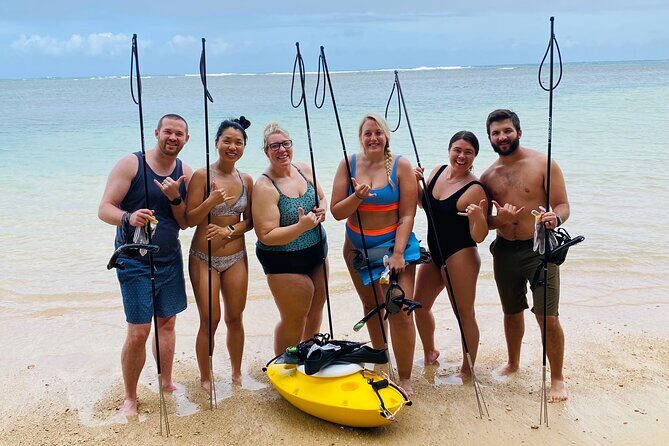
Once you’re in, the experience shifts from learning rules to learning timing. The guided session lasts about two hours, and the goal is to practice what you learned: positioning, aiming, and making shots when conditions line up.
Expect to see plenty of fish up close. You’re also likely to notice that spearfishing isn’t only about spotting. It’s also about staying calm and steady long enough to line up your shot. Several people described it as challenging even when they were good swimmers, because the spear setup works like a slingshot and holding tension takes effort—especially in your dominant arm.
A few practical details that help you set expectations:
- You may be spread out from other people in your group while hunting (think tens of yards, not arm’s length).
- Current can affect how easy it is to move and aim.
- Low tide can make the swim out and back harder for some people, with more scraping risk.
And then there’s the catch reality. This is instruction and sustainable practice first, not a guarantee of dinner. Many people came home without fish, and still felt the experience was worth it because they learned how the sport works in the real world. If you show up thinking you’ll definitely land something, you’ll feel disappointed when you don’t. If you show up ready to learn and try, the day becomes more about progress than results.
What Happens at the End: Photos, Q&A, and a Take-Home Catch
The last 15 minutes are about closure. You’ll do team photos and a Q&A so you can ask the practical questions you didn’t want to interrupt during the water session.
If you landed a fish, the guide will bag it so you can take your catch home. People also shared that guides helped clean and prep fish so they could cook it later, which is a huge part of why this feels special compared with typical snorkel trips.
If you didn’t land a fish, you’re not sent home empty-handed in terms of learning. The whole structure—master class, guided practice, and Q&A—is meant to leave you with skills you can build on. Even if your first day is mostly about missed shots and better technique for next time, you’ll leave understanding how the sport feels, what mistakes are common, and what to focus on.
Gear and Logistics That Matter Most (So You Don’t Get Stuck)
Let’s talk gear and what you must plan for, because this is where beginner days usually go sideways.




What’s included
- Snorkeling equipment except fins
- Spearfishing instruction and the on-shore master class
- Guided in-water spearfishing session
- Use of a traditional three-prong spear
- Use of snorkeling equipment
What you must bring
- Fins are required (bring your own)
- Snacks and water (you should bring your own)
- Sunscreen
- Transportation to and from the meeting point
A recurring tip from real experiences: cheap fins can feel limiting when current is involved. If you already have decent snorkeling fins, bring them. If you’re buying at the last minute, it might be worth getting something that helps you move with control instead of just thrashing.
Also, bring your water and snacks. The session is a full morning block (start time is 9:30 am), and you’ll be glad you can refuel without depending on shops.
The Fishing License Reality: Don’t Get Surprised by Paperwork
For out-of-state residents, Hawaii requires a recreational ocean fishing license. It’s listed as $20 for 24 hours, and you can get it through the DLNR licensing site (fishing.hawaii.gov).
This is the kind of detail that can be easy to ignore until the day-of. If you’re coming from outside Hawaii, confirm you have the license before you go. It’s not about complicating your vacation—it’s about making sure you’re allowed to fish and take part legally.
Value on Kauai: Is $125 Worth It?
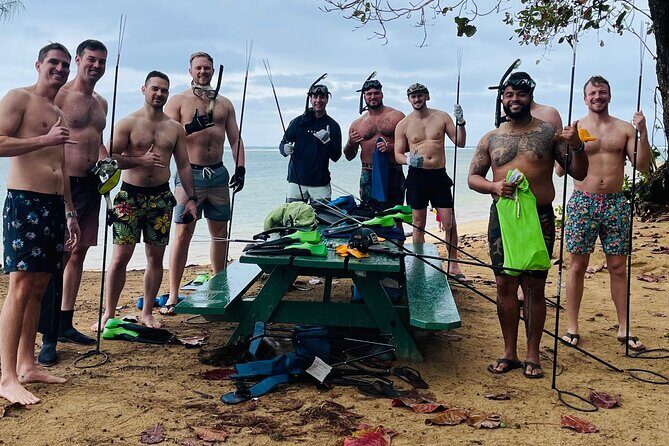
At $125 per person for about 3 hours with a max group size of 6, this is not a bargain-price activity. But it also isn’t just a rental and a route map.
You’re paying for:
- Instruction that starts on shore with safety and fish ID
- A guided reef session focused on technique
- The use of the three-prong spear and snorkeling equipment (without fins)
- A small-group setup that lets your guide coach effectively
When you compare this to typical snorkel tours, the value changes. This is more work, more focus, and more risk-management. But it’s also more “learnable,” and people often leave with a skill they didn’t have that morning.
If you’re the type who wants a hands-on Kauai story—not just photos—this one can be money well spent. If you want a laid-back swim with zero effort, you might find the stamina requirement is the deal-breaker.
Who This Speaks To Best (And Who Might Hesitate)
This lesson fits best if you:
- Are comfortable snorkeling and can swim with confidence
- Want hands-on instruction and repeated practice
- Like the idea of learning a traditional Hawaiian activity with responsible rules
- Don’t need a guaranteed catch to enjoy the day
It may be less ideal if you:
- Struggle with swimming or staying calm in open water
- Get tired quickly in your arms (spearfishing requires holding tension)
- Expect a casual, low-effort outing
The reviews also hint at one more reality: even when you’re capable, learning curve and physical demand are real. Think of it as learning a sport, not just trying on an experience.
Tips to Make Your Day Easier (Learned the Hard Way for You)
If you want a smoother first attempt, here are the most practical tips that show up again and again in people’s feedback.
Prep your snorkeling comfort first. If you haven’t snorkeled in a while, it helps to practice before your lesson so you can focus on technique rather than breathing and buoyancy.
Pay attention to tide timing. Low tide can make the swim out and back harder and increases the chance of getting scraped if you’re not moving smoothly.
Take the physical side seriously. Hold-and-aim tension wears you out, even for decent swimmers. Bring energy, and plan for arm fatigue.
Bring good fins. This is the one item where upgrades can pay off quickly. Current can turn an uncomfortable fin into a frustrating day.
Learn a few fish names ahead of time. The master class covers native and invasive fish ID, and if you do a little homework, the lesson lands faster.
If you do those things, you’ll get more out of the guided time and waste less effort correcting avoidable mistakes.
Should You Book Hawaiian Reef Spearfishing on Kauai?
I think you should book this if you want a real skill lesson, small-group coaching, and you’re comfortable meeting the sport halfway with swimming ability and physical stamina. The format is built for beginners: a safety-and-ID master class on shore, then guided practice where you’re not left guessing.
Pass if you want something purely relaxing. Spearfishing here is active, and results vary. But if you’re okay with the learning-first approach—and you’re ready to bring fins, sunscreen, and a little arm stamina—you’ll likely leave with a standout Kauai story and the start of a new capability you can build on.
FAQ
Where do we meet for the Hawaiian Reef Spearfishing Lesson?
The meeting point is 4241 Anini Rd, Kilauea, HI 96754, USA.
How long is the lesson?
The experience runs about 3 hours (approx.).
What time does it start?
The start time is 9:30 am.
How many people are in the group?
The maximum group size is 6 travelers.
What language is the lesson taught in?
The experience is offered in English.
What equipment is included, and what do I need to bring?
Included is snorkeling equipment except fins, plus use of a traditional three-prong spear and spearfishing instruction. Fins are required, and you need to bring your own.
Do I need a Hawaii recreational ocean fishing license?
If you’re an out-of-state resident, a Hawaii state recreational fishing license is required. It costs $20 for 24 hours and can be obtained on the DLNR website.
Is there a catch guarantee?
No. The focus is instruction and sustainable practices, not catch-and-cook, so landing a fish is not guaranteed.
What happens at the end of the tour?
The lesson ends back at the meeting point, with team photos and a Q&A. If you catch a fish, the guide will bag it for you to take home.
What is the cancellation policy?
You can cancel for a full refund if you cancel at least 24 hours before the experience’s start time. If you cancel less than 24 hours before, the amount paid is not refunded. The activity may also be canceled due to poor weather, and you’ll be offered a different date or a full refund.