REVIEW · KAUAI
Small Group Waterfall Rappel in Lihue, Kauai
Book on Viator →Operated by Da Life Outdoors · Bookable on Viator
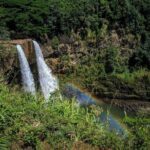
Two waterfalls, one rope line. This small-group Kauai adventure takes you down Bamboo Falls (about 30 feet) and the bigger Papakolea Falls (about 60 feet) with certified help and a real safety setup. You’ll rappel on private land with views over the Hule‘ia watershed and the Ha‘upu Mountain range.
I love how personal the instruction feels, especially for first-timers. Before you touch wet rock, you get a safety briefing and even practice on a dry wall, so you learn how to lean back and control your descent. I also like that you do not have to arrange gear: helmets, harnesses, and water shoes are provided, plus you get snacks and drinks along the hike.
One thing to think about: this is not a hotel pickup tour. You’ll drive yourself to the meeting point in Puhi, and the experience also needs solid weather to run.
In This Review
- Key points worth knowing
- What This Kauai Rappel Really Is (And What It Isn’t)
- Puhi Meeting Point: Plan on Driving
- Safety Briefing and Dry-Wall Practice (Where Confidence Is Built)
- The Hike Into Hule‘ia National Wildlife Refuge
- Bamboo Falls: Your 30-Foot Warm-Up Rappel
- Papakolea Falls: The 60-Foot Test (And the Shelf Moment)
- Gear That Makes the Difference (Shoes, Helmet, Harness, and Mud)
- Snacks, Water, and Juice: Keeping Your Energy Steady
- Fitness, Age, and Body-Measurement Limits (Please Read This Part)
- Price and Value: What You’re Paying For at $207.20
- Weather, Timing, and How to Plan Your Day
- Should You Book This Waterfall Rappel?
- FAQ
- How long is the Kauai waterfall rappel tour?
- Is this a small group or private tour?
- Where do I meet, and do they pick me up?
- What waterfalls will you rappel?
- Is equipment provided?
- What should I wear?
- What kind of fitness level do I need?
- Are there age or height limits?
- Are there weight and waist requirements?
- What happens if the weather is bad?
Key points worth knowing
- Two rappels, including a 60-foot waterfall with a shelf platform moment at the top
- Dry-wall practice plus hands-on coaching so first-timers can keep up
- All gear included (helmet, harness, and water shoes/tabis)
- Snacks, water, and juice during the tour, so you’re not scrambling mid-adventure
- Conservation fee included tied to the Hule‘ia National Wildlife Refuge
- Private group feel, so you’re not lost in a big crowd
What This Kauai Rappel Really Is (And What It Isn’t)
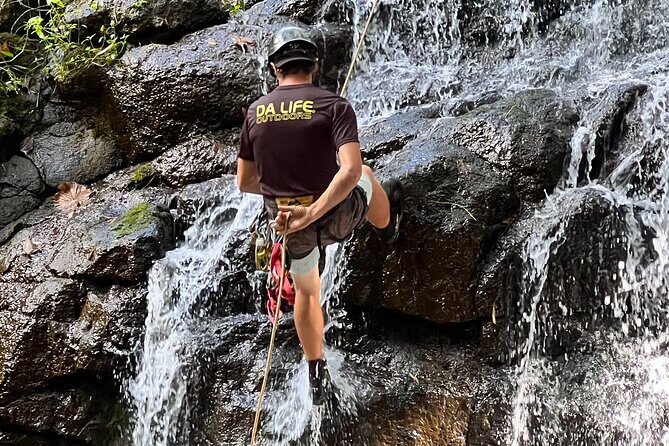
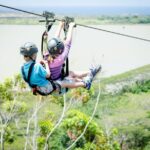
This is not zip lining, and it’s not rock climbing. It’s straight-up waterfall rappelling, which means you learn rope control and then use that skill to descend two different falls in sequence. You’ll hike in first, then rappel down Bamboo Falls and Papakolea Falls, with the guide team managing pacing and safety.
The big appeal for me is that this is an activity you can wrap your head around in advance: safety briefing, practice, short hike, then two clear “go time” moments. You’re not guessing what the hard part will be. The falls are the show, and the instruction is built to get you to the starting edge with confidence.
Also, it’s designed as an outdoor experience with a conservation angle. Part of your fee goes toward the Hule‘ia National Wildlife Refuge, and you’re on private lands rather than a crowded roadside attraction. That matters because it usually means a more respectful pace and fewer distractions.
Other waterfall and rainforest tours we've reviewed in Kauai



Puhi Meeting Point: Plan on Driving
Hotel pickup and drop-off are not included, so you’ll want a rental car or a reliable ride. The tour starts at the Puhi area (meeting point shown as XJ37+MW Puhi / XJ37+MWQ Puhi) and ends back at the same meeting point.
This is the kind of tour that works best if you like to control your own timing. You’re not waiting around for a pickup window, and you can plan to eat after the tour without building in extra transport buffers. Just keep in mind it’s a half-day style experience (about 4 hours) so you’ll want to schedule it like a real event, not a gap-filler.
If you’re coming from the airport area or the south shore, build in driving time and don’t rely only on memory. Even the tour reviews emphasize trusting the GPS location for getting there.
Safety Briefing and Dry-Wall Practice (Where Confidence Is Built)
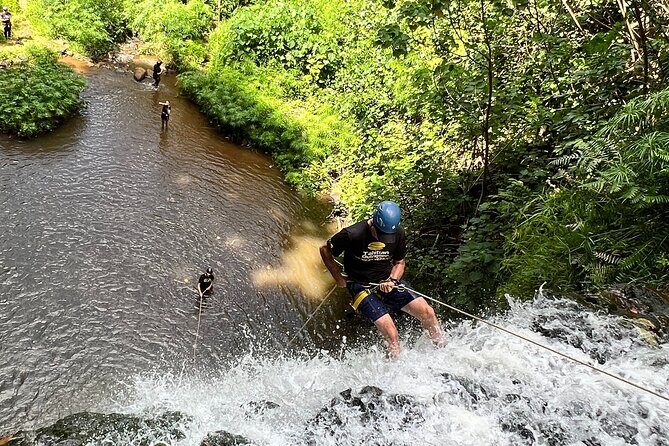
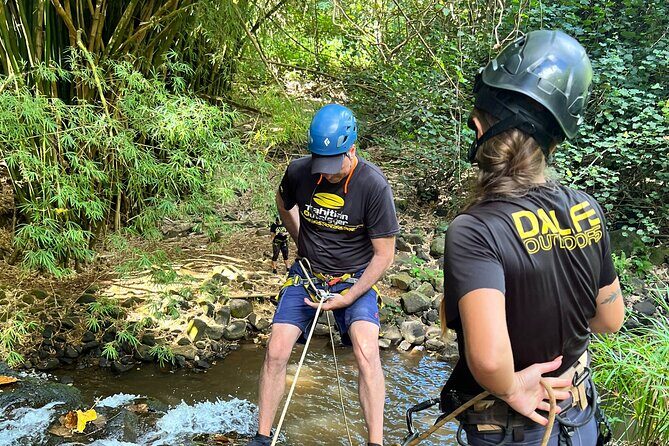
You start with a detailed safety briefing, then you practice rappelling on a dry wall before you head to the waterfalls. That practice step is not just filler. It’s the part that helps you understand body position, rope handling, and what your harness setup actually feels like before you’re facing wet rock and a waterfall in your face.
You also need a head for heights. The tour includes descents that total up to roughly 60 feet, and the rock and conditions are real. The good news is the guides coach you through it rather than tossing you in.
From recent experiences, the guide teams have been praised for making people feel safe while still keeping the energy up. Names that have shown up in recent groups include Matt and Rashad, and also Matt with Nan, Matt with Kate, and other combinations. Regardless of who you get, the pattern is the same: teach first, then rappel.
The Hike Into Hule‘ia National Wildlife Refuge
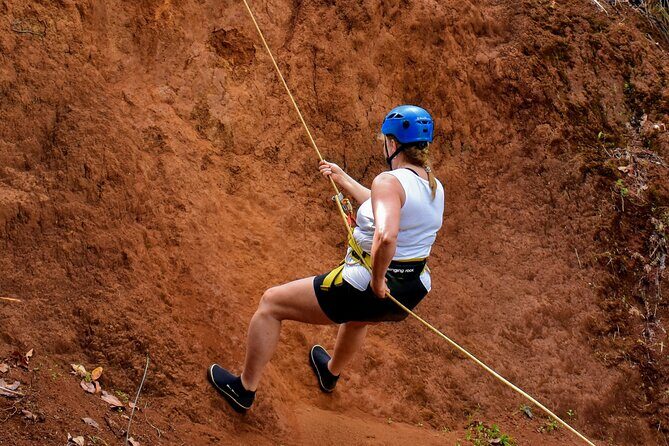
After practice, you hike under a lush tropical canopy to reach the two secluded waterfalls. This is a key part of the day because it sets expectations: you’re moving through Kauai’s inland greenery before the adrenaline hits.
The tour ties into the Hule‘ia National Wildlife Refuge, and conservation is part of the package. Even if you’re focused on the thrill, it’s worth paying attention to the trail moments. You’ll be in a living ecosystem, and the guide team often points out local plants along the route.
The hike itself is usually described as short, but the terrain is still outdoors and uneven. Plan for mossy, slick surfaces leading up to the rapids stage. If your goal is photos, this is also where you’ll get nice viewpoints before you commit to descending.
Bamboo Falls: Your 30-Foot Warm-Up Rappel
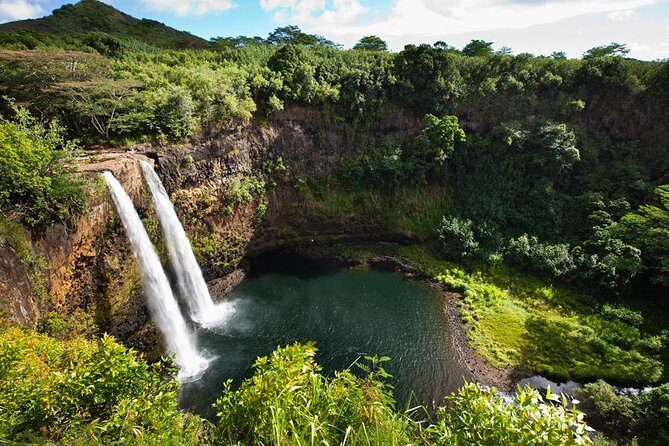
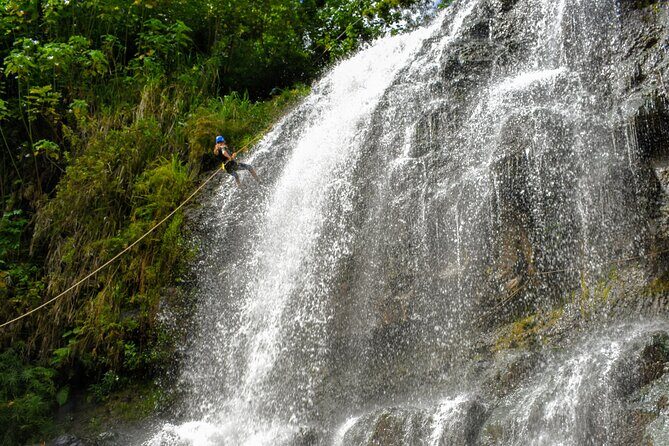
Bamboo Falls is the first descent, described as about 30 feet. Think of it as the training wheels with real stakes. You’ll get the feeling of the waterfall nearby and the sensation of going down while water keeps moving everywhere around you.
For first-timers, this is where people learn that rappelling can feel scarier from the start than it ends up being once the technique clicks. The practice on the dry wall is what makes this second step doable.
There’s a practical takeaway here: if you struggle with heights, start by trusting the process instead of trying to outthink the fear. Your job is to follow the guide instructions, keep your position steady, and let the system do its work. If you fight it, you’ll use more effort than necessary.
Other Lihue tours we've reviewed in Kauai





Papakolea Falls: The 60-Foot Test (And the Shelf Moment)
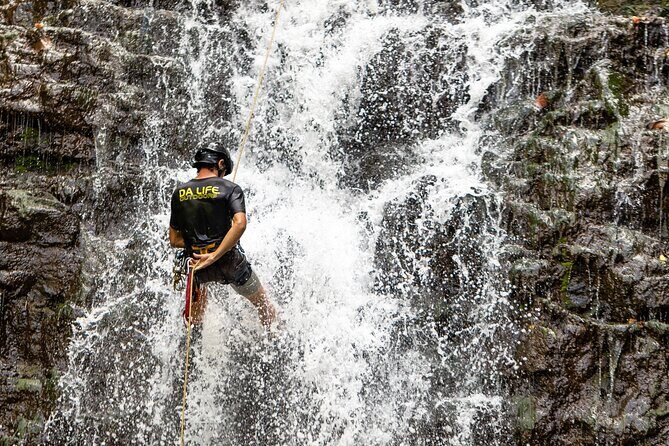
Then comes Papakolea Falls, the taller one at about 60 feet. This is the rappel that earns the bigger adrenaline rush, and it’s the one that likely makes you feel your stomach during the first second.
You’re rappelling in the presence of a roaring wall of water, and the rock can be slick and mossy. Even if you’ve practiced, the conditions make it feel more intense. That’s why the guide’s coaching during positioning matters so much.
One specific detail to look forward to: there’s a platform area behind the big waterfall where you can climb onto a shelf. It’s the kind of moment that turns a scary activity into a memory you can actually talk about later. You get views right in the action, and the guides help you do it safely.
Gear That Makes the Difference (Shoes, Helmet, Harness, and Mud)
You’re provided with helmets, harnesses, and water shoes (tabis). That’s a major value point because good gear is part of the safety plan, not an optional add-on. It also means you can travel lighter—no chasing rentals, no guessing about sizes last minute.
A common tip from participants: avoid wearing white. By the end, the tour environment can be muddy, and you’ll regret light-colored outfits fast. Wear something you’re okay sacrificing to the island.
In addition to the core gear, some recent riders noted that the guides provide a dry bag for your phone and small items. That’s not in the basic equipment list, but it’s a smart detail if it’s available on your day. If you bring a phone, plan to keep it secure and expect water and spray in the rappel zone.
Snacks, Water, and Juice: Keeping Your Energy Steady
This tour includes a snack and a station with water and juice. That matters because rappelling takes focus. If you’re hungry or under-hydrated, your brain will treat fear like a bigger threat than it is.
The tour runs about 4 hours, so it’s not long enough to “wait and see” on food. The built-in break helps you stay calm during instruction and helps you keep your energy up for the second, bigger waterfall.
Also, because there’s no hotel pickup, you might not have a long buffer before the start. Eat beforehand if you can, then rely on the snacks on tour to get you to the finish without feeling wrecked.
Fitness, Age, and Body-Measurement Limits (Please Read This Part)
This experience is best for people with moderate physical fitness and comfort being outdoors on uneven ground. You need a head for heights, and you’ll be learning a movement skill you’ll repeat with coaching.
There are clear limits:
- Minimum age: 10
- Not recommended for those over 65
- Weight: 70 lbs to 250 lbs
- Waist measurement: 22 to 48 inches
These aren’t random rules. They’re tied to how harness systems fit and how the team can keep everyone safe. If you’re near the edge of those limits, it’s worth checking carefully before you book.
Price and Value: What You’re Paying For at $207.20
At $207.20 per person, this isn’t a casual activity. And you can see why some people feel it’s pricey. You’re paying for instructors, certified safety systems, and a guided experience that includes real rappelling down two waterfalls.
Here’s the value math that makes sense: you get gear provided, safety training, conservation fee support for the Hule‘ia refuge, plus snacks and drinks. If you were to price out instruction, equipment, and guiding separately, the package tends to look more reasonable.
You also get the small-group, private tour feel. That typically means less waiting and more hands-on attention. In high-risk activities, that attention is part of the product, not just a nice extra.
Weather, Timing, and How to Plan Your Day
This tour requires good weather. If conditions are poor, it can be canceled and you’ll be offered a different date or a full refund. That’s standard for waterfall activities, but it’s still important for planning your Kauai schedule.
Because it runs about 4 hours and ends back at the meeting point, I suggest booking it on a day you can be flexible. If you’re stacking tours back-to-back, you’ll feel stressed if weather delays the start.
Also plan clothing and footwear for wet conditions. The provided water shoes help, but you’ll still be moving through damp terrain. Bring a change of clothes if you can, and keep your expectations realistic: you’re going to get dirty. That’s part of the deal on Kauai.
Should You Book This Waterfall Rappel?
Book it if you want a Kauai “wow” that’s more than sightseeing. This is for people who like hands-on action, who can follow safety instructions, and who want a chance to rappel down a 60-foot waterfall without having to arrange gear on your own. I especially think it suits families with teens who are ready for an adventure that feels scary but structured.
Skip it if you don’t want heights, or if the fitness/measurement requirements are a concern. Also, if you hate driving and you’re relying on hotel pickup, this one will feel annoying since there’s no pickup.
If you’re on the fence, remember this: the day is built to teach you first (dry-wall practice), then test you (two waterfalls). People come out praising the safety and energy from the guide teams, often calling out the confidence boost that comes from calm coaching.
FAQ
How long is the Kauai waterfall rappel tour?
The tour lasts about 4 hours.
Is this a small group or private tour?
It’s described as private, with only your group participating.
Where do I meet, and do they pick me up?
You meet at the Puhi meeting point (listed as XJ37+MW Puhi / XJ37+MWQ Puhi). Hotel pickup and drop-off are not included, and it ends back at the meeting point.
What waterfalls will you rappel?
You rappel two waterfalls: Bamboo Falls (about 30 feet) and Papakolea Falls (about 60 feet).
Is equipment provided?
Yes. Helmets, harnesses, and water shoes (tabis) are provided.
What should I wear?
Wear clothes you don’t mind getting muddy. Avoid light-colored clothing like white, since the conditions can be very messy by the end.
What kind of fitness level do I need?
You should have a moderate physical fitness level.
Are there age or height limits?
Minimum age is 10. It’s not recommended for people over 65.
Are there weight and waist requirements?
Yes. You must weigh between 70 lbs and 250 lbs, and you must have a waist measurement between 22 and 48 inches.
What happens if the weather is bad?
The experience requires good weather. If it’s canceled due to poor weather, you’ll be offered a different date or a full refund.